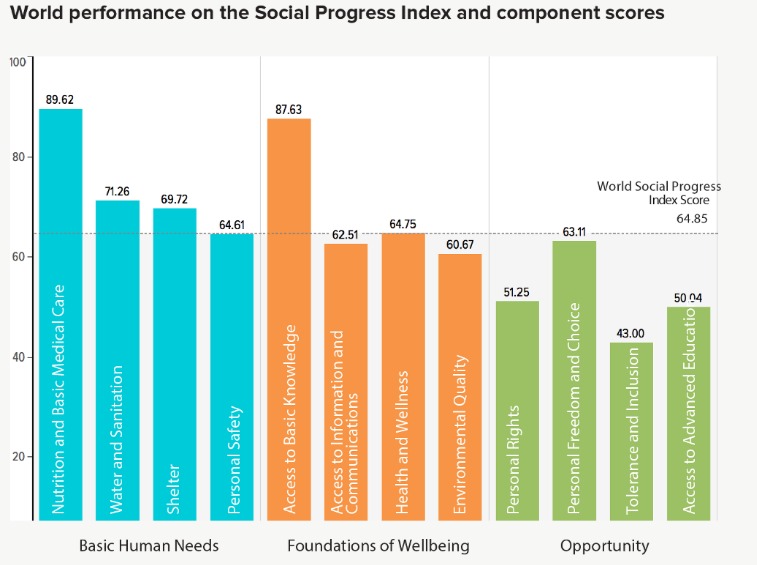
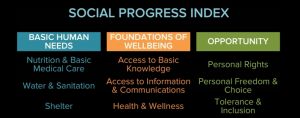
Quality of life across the world is improving, but tolerance, personal safety and inclusion are declining, says this year’s 2017 Social Progress Index (or SPI), an annual score that compares 128 countries using various key indicators in the areas of basic human needs, well-being and opportunities for advancement.
Is It a Happiness Index?What the SPI Is
“The SPI is designed so that ordinary citizens can get a very quick read on how well or poorly their countries are performing in areas that matter to them: health care, education, rights,” says Sally Osberg, President and CEO of the Skoll Foundation.
“The tool can also provoke citizens to demand accountability from the decision-makers responsible for strengthening institutions they care about.”
Notable Trends
While there is a strong correlation between GDP per capita and SPI, economic development and social progress is not exactly linear. Among G20 nations, SPI scores are flatlining. The reports attribute the flatlining trend to “increasing social inequity arising from the concentration of wealth and power into fewer hands, a greater divide between the very rich and the very poor, and a stagnating middle class.”
How Countries Ranked
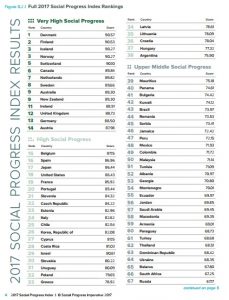
Northern European countries Denmark, Finland, Iceland and Norway topped the rankings. Yemen, Guinea and Afghanistan were among the lowest countries ranked.
The United States came in at #18 behind Spain and Japan, but ahead of France and Portugal.
A small group of 15 countries, mainly in Central America or sub-Saharan Africa, declined in their overall score. Hungary stood out with the largest decline among European countries, driven largely by changes in tolerance and inclusion.
Sources: SPI, Skoll Foundation