An asset management fund in the UK called FP WHEB Sustainability Fund says its impact investments have been paying off. It cites new data it says evidences that its way of investing can really improve society and the environment, while delivering respectable financial returns.
What Its Data Says
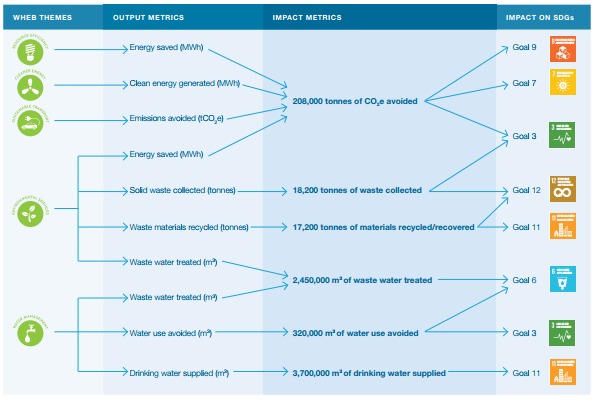
In its annual impact report, the firm says that for each $1.3 million it has invested in its portfolio of 62 impacting enterprises, it has helped avoid 1,600 tons of greenhouse gas carbon dioxide from entering the atmosphere, recycle 140 tons of waste, generate 1,200 MWh of renewable energy, provide 30 million liters of drinking water and treat 1.6 million liters of waste water.
In addition, during 2016, the investment fund may have also contributed to job-creation. Firms in its portfolio on average increased their workforce by 8%, hiring approximately 1.7 million more people by the end of last year, a year-over-year increase of more than 142 thousand.
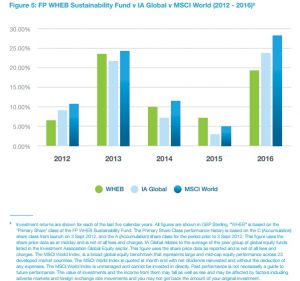
Returns of its A share class have produced 6.03% year-to-date, while returns of its C share class, a lower cost vehicle, have produced 6.29% year-to-date. The MSCI World Total Return, by benchmark comparison, has returned 3.10% year-to-date. Returns last year approached or surpassed 20% (see figure).
Its assets under management (AUM) rose 51%, reaching $161 million. As of the end of April 2017, AUM surpassed $200 million, WHEB said in a statement last week.
Its portfolio includes Intertek, a UK-based global quality assurance partner to renewable energy companies, Orpea, a French-based operator of nursing and elderly care and Shimano, the bicycle component maker based in Japan.
The fund, classed as a “global growth” fund by the UK’s Investment Management Association, holds firms in its portfolio for an average of three to five years.
“Share” of Impact
The WHEB sustainability fund does acknowledge the challenges of measuring its true impact because the proportion of shares it owns is small compared to those owned by other investors. It bases its calculations of impact on the proportions of assets it owns among firms in its portfolio.
It also says that because the area of measurement impact is very new, methodologies are still in flux and counting may be imperfect. A range of potential measurement challenges include “double-counting” of impact data, inconsistent reporting of data over a longer time period and accurately measuring product and service level impacts themselves.
Still, the fund is among the first in the world to have included climate change impact data in financial reporting.
“Investors of all types are increasingly interested in the purpose and impact their investments have on the world. We would encourage all investors, from the largest pension fund to the individual investor, to ask their advisors and asset managers for information on the impact of their investments,” George Latham, its managing partner and chief investment officer, said.
Sources: WHEB Report, Wealth Briefing