A large majority of impact investors report feeling satisfied with how their investments have been performing. Their investments have either met or exceeded their expectations for both impact (98%) and financial performance (91%).
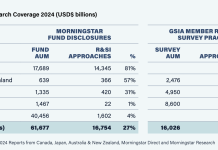
Additionally, GIIN reports that the size of the impact investing market has grown to $114 billion from $35.5 billion in 2015 and $25.4 billion in 2013, however the number of respondents in the latest GIIN survey has also grown to 209 from 62 in past years.
These are among the key findings that the Global Impact Investing Network or GIIN has shared in its latest investor survey.
Other Key Takeaways
Larger and more well-known asset managers and financial firms are joining the space. Respondents feel this may help bring more credibility but also acknowledge the risks associated with herd effect and mission drift. It might be too early to tell.
A larger body of market research and data on products and performance is now available (89%) as well as talent (90%).
Respondents are increasingly committed to the United Nations Sustainable Development Goals (26%). About another third (34%) plan to also commit in the future (figure below).

Not surprisingly, almost all respondents measure the performance of their investments, both financial and social, using a variety of ways, some proprietary, others more qualitative.
Sustainable housing, climate, energy, and microfinance were the top impact areas invested in.
Many recognize the opportunity of below-market-rate capital. Roughly 80% of respondents believe below-market-rate can mitigate investment risk, attract new investors, and act as a transitionary bridge between philanthropy and market-rate capital.

Additionally, below-market-rate investors allocate a greater share of their assets toward seed- and venture-stage companies than do investors primarily targeting market-rate returns (see figure above). More than 50% of respondents say a lack of appropriate capital across the risk/return spectrum remains a significant challenge.
It will be interesting to see how this develops in the future via say, policy prescriptions. For example, angel tax credits and development tax credits can be used to improve capital flows to venture stage funding to incent against risk.
“This year’s annual survey details an impact investing industry that is becoming increasingly established and professionalized, but also a market that is complex and diverse,” said Amit Bouri, GIIN Cofounder and CEO.
“The findings allow us to dig deeper into the topics the industry will need to concentrate on to further develop the market and achieve the broad global impact we seek.”
Source: GIIN