The so-called “Longevity Economy” – the impact of the nation’s population of over 111 million 50-plus consumers on the economy – represents a significant and ripe sector for purpose-driven investments.
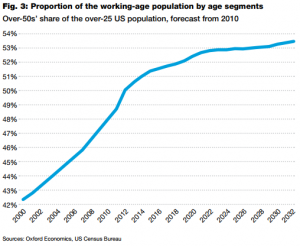 According to a Global Age Watch Index report in 2015, the 50-plus age demographic generated $7.6 trillion in economic activity (a $500 billion increase from 2013), including $5 trillion in consumer spending. With the population segment living longer, growing as more consumers get older each year, it is projected to grow to nearly double to $13.5 trillion by 2032.
And with size comes more diversity, and opportunity. Many are increasingly starting or are getting involved in innovating new businesses to support ebbing fixed incomes, insufficient pensions and judging by ongoing Washington budget and policy debates on health care, government entitlement uncertainty.
Besides Uber and Lyft, who notably started programs to service the elderly last year, a sampling of ventures include:
Hello Envoy – family “concierge” service for seniors and their families, including running errands, caregiving and elderly assistance. Most recent funding was for $1.16 million in May 2016. Based in San Francisco.
Chefs For Seniors – marketplace for professional chefs to connect with seniors who need help with meals. Food is cooked in the home tailored for dietary needs. Most recent funding was for $125K in May 2016. Based in Australia.
SilverRide – door-through-door assisted ride and personalized transportation service for elderly and senior citizens. Drivers are licensed, bonded, trained and insured but service requires riders to book trips 24 hours in advance . No data on funding. Based in San Francisco.
LiftHero – ride-sourcing service for elderly relying on trained drivers, many of whom are nurses or other medical professionals. Drivers use their personal cars and provide riders with door-to-door assistance, including helping with bags, groceries or assisted living equipment, unlike Uber or Lyft who do not provide wheelchair assistance. No data on funding. Based in San Francisco.
3Rings – monitors the wellbeing of their elderly relatives via a “smartplug” that interfaces with connected appliances with rules that can be configured to alert families via mobile as those appliances are turned on/off. £600,000 in funding in a round led by health insurer Westfield Health March 2016. Based in the UK.
Breezie – tablet-based personalized platform designed to better engage seniors with technology. Nearly $7.59 million funding via Clearly Social Angels and Ziegler Longevity Fund. Based in the UK, and are expanding to the US.
E2C – this post’s featured video, E2C “Easy-To-See” makes customized user interfaces for smartphones, tablets, TVs and smart watches for the 70+ consumer. $1.3 million in 2015 funding via Curious Minds Investments, Plus Ventures, TMT Investments. Based in Israel, with products available in US markets.
HomeHero – platform to connect trained on-demand service between caregivers and careseekers. Notably, HomeHero ceased operations just in February 2017 after Fair Labor Act changes that required all homecare workers to receive W2 and be paid overtime. Had $23 million in funding via Launch Fund, Social Capital, Tencent. Based in Southern California.
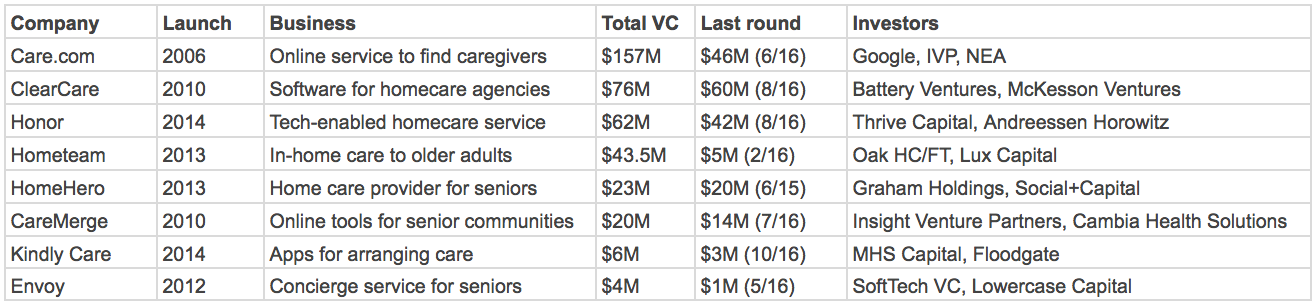
The market for home care remains large however (graphic below) with Hometeam, backed by over $43 million in funding by Kaiser Ventures, Oak HC/FT and Lux Capital, and Honor, backed by over $62 million in funding by Andreesen Horowitz, Homebrew and True Ventures.
Knopka Zhisni – a medical system “Life Button” that sends signals when old, disabled people and children need help. Over $2 million in funding via Internet Initiatives Development Fund, Rintech.ru, and FRIII, a Putin-sponsored fund. Based in Russia.
Sources: Forbes, Crunchbase