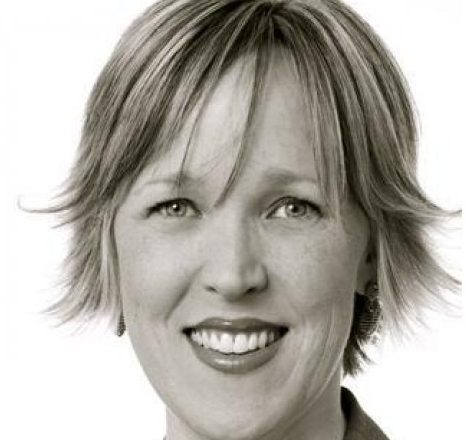
In a short but good read, Shannon Houde, an international career advisor, suggests three tips to one aspiring London-based professional after growing disillusioned with her career.
About Shannon Houde
Ms. Houde is the founder of Walk of Life Consulting, the first international career advisory business focused solely on the sustainability, social impact, international development and Corporate Responsibility (CR) fields.
Previously she worked as a hiring manager, a business coach and a CR consultant for Deloitte, Corporate Citizenship, Barclays, Adobe and WWF.
***
Dear Shannon,
I’ve been with a fund management firm in London for the past five years since graduating from a master’s program. While I enjoy my job function and the day-to-day buzz of being in “The City,” I’m becoming increasingly disillusioned with the purpose of my work. I think I’ve fallen out of love with making money. I took a three-month sabbatical last year to volunteer in East Africa and loved it. While I don’t think I want to change careers completely and work in international development, I would like to try something new. Any ideas?
It is not hard to see the appeal of working in the sector. More than any in the previous generation, millenials in particular, are investing and increasingly working in organizations that prioritize the greater good, according to a recent survey. The field is growing, evidenced by recent study by the Global Impact Invest Network (GIIN) that impact investment assets under management (AUM) grew 18% to nearly $36B from $25B in 2013.
Shannon Houde’s tips include getting getting up to speed, getting connected and getting specific, good advise as there is plenty to digest in the field.
- Getting up to speed
Impact investing is evolving rapidly and becoming increasingly diverse. As a new player in this field, you need to appreciate the nuances. This means doing your homework to fully understand the approaches, structure and specialties within the sector.
2. Getting connected
Organizational and business success rests on the strength of your relationships: “Strong relationships are based on trust,” she said. “Personal finance is often a private and intimate matter that requires wealth advisors to not only be skillful in financial management, but also trustworthy, to uphold their fiduciary duty.” This applies to impact investing as well.
3. Getting specific.
Are your passions in the developing world or closer to home? In environmental issues such as water, biodiversity and energy or more on the social side of the fence in health, gender or education? Get specific if you want to make maximum impact.
In another article, Brian DeChesare, founder of Mergers and Acquisitions, interviews another professional based in Hongkong suggests cold-calling or cold-emailing people in organizations related to impact investing and volunteering at events hosted by foundations.
Q: So you quit abruptly and then started looking for something that would interest you… what was your first step?
A: I had heard about companies that invest in search of both social good and profit, so I started learning what I could about them.
This is a VERY small and personal industry, so I started cold emailing people at organizations related to “impact investing” here, and volunteered to organize conferences such as the one that the Rockefeller Foundation hosts.
One thing to note is that the field while small in AUM compared to conventional investing can actually be quite wide when viewed from the lens of breadth of variety of organizations participating, short of yet fully operating, in the space.
Outside of the traditional big-name investment funds such as the star-studded Rise Fund, these classes of ” impact investments” may be in the form of say a social impact bond, or the US government’s Social Innovation Fund, or an New Markets Tax Credit based project, or even a small microfinance development program outside of the US.
Be Inspired Some More -> Greenbiz, Mergers & Acquisitions