Interest in responsible social and impact investing is growing in Asia but it won’t really gain more momentum until control of the region’s vast fortunes is transitioned to younger generations in wealthy families and disclosure of SRI practices are made less opaque, leading Swiss private banker Lombard Odier says.
“The millennials are much more interested in it than their parents were,” points out Vincent Duhamel, Lombard Odier’s head of Asia. “Once dad’s given up the controls or he’s no longer able to control the wealth of the family, and the kids take over – they tend to go much more for an impact investing standpoint.”
Duhamel says the bank is having more conversations with high net worth individuals (HNWIs) in Hong Kong and across Asia aged between 30 and 40 years old. Previously, SRI investing had been dominated by big institutional investors like European and Canadian pensions funds, he says. “Before there was always a perception that it meant you had to accept a lower return,” Duhamel believes. “But you might even get better returns in future as more regulations force investors into this space.” An example of regulation affecting SRI is an exclusion list brought in by Dutch regulators three years ago that stops institutions investing in cluster bombs. (Barron’s)
When reallocating wealth to impact investment, the majority of respondents (60.2%) said they would shift money from traditional investments (equities and fixed income), while some (23.1%) would prefer to reallocate money from charitable donations. One quarter (25.2%) of respondents also believe that impact investing allows them to pursue financial and social impact returns.
Despite the clear interest in impact investing, most respondents (89.8%) said they would prefer to allocate less than 50% of their overall wealth to impact investing, while nearly half of the respondents (49.1%) said they would allocate less than 15% of their wealth into the asset class. (Lombard Odier)
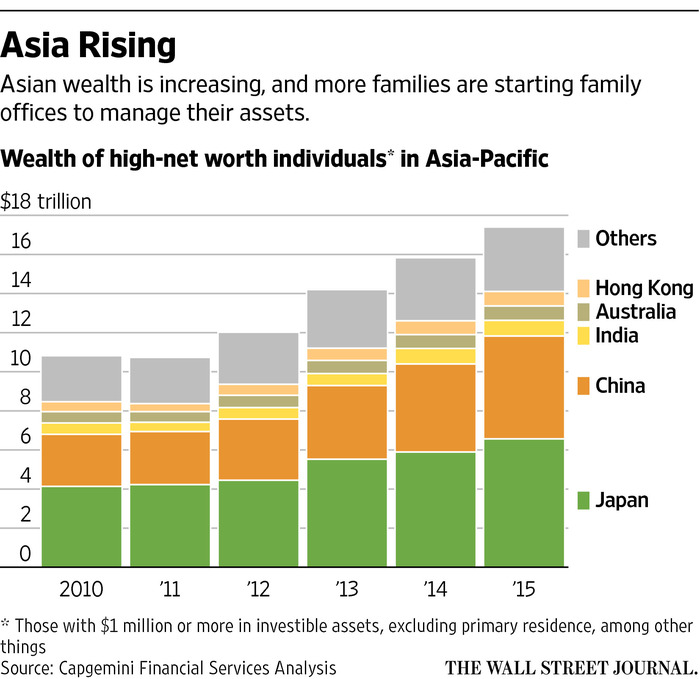
Asia family offices, additionally, tend to use more aggressive investment strategies than their US counterparts, which may represent an opportunity for impact investing. Many of the families are first-generation entrepreneurs and have great appetite for risk. (Wall Street Journal)
Sources: Barron’s, Lombard Odier, Wall Street Journal (inc. chart)