Tiny homes are being seen as one solution to the homeless problem that plagues cities like Seattle, San Francisco, Dallas, Portland, New York and Denver.
In Seattle, the initiative is being led by The Low Income Housing Institute (LIHI), a nonprofit affordable housing developer in the U.S. Northwest. LIHI manages over 2,000 housing units at 50 sites in 6 counties throughout the region.
The tiny home site, called Othello Village, now serves 300 homeless people and has moved nearly a hundred of them into real housing or more stable situations.
Why This Matters
In many cities like San Francisco, the homeless problem is an intractable social issue, costs up $240 million a year in the Bay area, and is endlessly debated with no permanent relief in site. In a recent report, San Francisco has the highest population of homeless in the U.S.

Seattle’s tiny home approach to help its homeless seems like one approachable solution San Francisco might consider. A social impact bond, like Denver’s or Australia’s experiment, could be underwritten to feed parts of that solution’s funding needs.
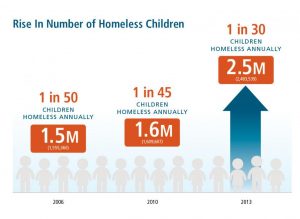
In other many parts of the U.S., the numbers of homeless people are growing. There are up to 2.5 million children that are homeless in the streets of the U.S. today, according to studies.
Funding
The Washington State Housing Trust Fund, the Housing Credit Program, and a mix of both private and foundation funds have invested in LIHI’s affordable housing projects including a new one being built in the city’s Aberdeen corridor.
The cost to construct the tiny houses at Othello is $2,200 each and can be additionally sponsored by private donations, according to LIHI. The tiny homes are superior to tents or even to conventional shelters because personal belongings can be locked up and tenants have access to their private units 24 hours a day.
***

“We’re very aggressive at getting people off the street, keeping them dry and warm and then getting them into real housing,” LIHI Executive Director Sharon Lee said. “Which is the goal, right?”
Why haven’t we done more of this?
One reason is a city-hired consultant blasted the idea last year, saying temporary encampments are a distraction from building real housing. This is fine in theory, but in reality we just had a lottery for 109 units of real housing and more than 2,000 people showed up. So there’s a crying need for something in the meantime.
Another reason is that any homelessness facility is politically tricky to site. A third reason, probably the biggest, is that city politicians spent much of last year bogged down in power struggles and an ill-fated crusade to open city parks to camping.
Now, to its credit, the city has committed to opening two new emergency tiny- house sites (as well as a tent camp in West Seattle). One tiny house village will be in Licton Springs, along north Aurora, and another in Georgetown. Slated to open this spring, they will together include 80 tiny houses.
Adding a handful already at other sites, that will bring us up to a grand total of about 120 citywide.
That’s one slow-rolling emergency response.
“It’s great they’re doing something, but we could easily have done so much more,” Lee says.
Sources: Wall Street Journal, Low Income Housing Institute, Seattle Times